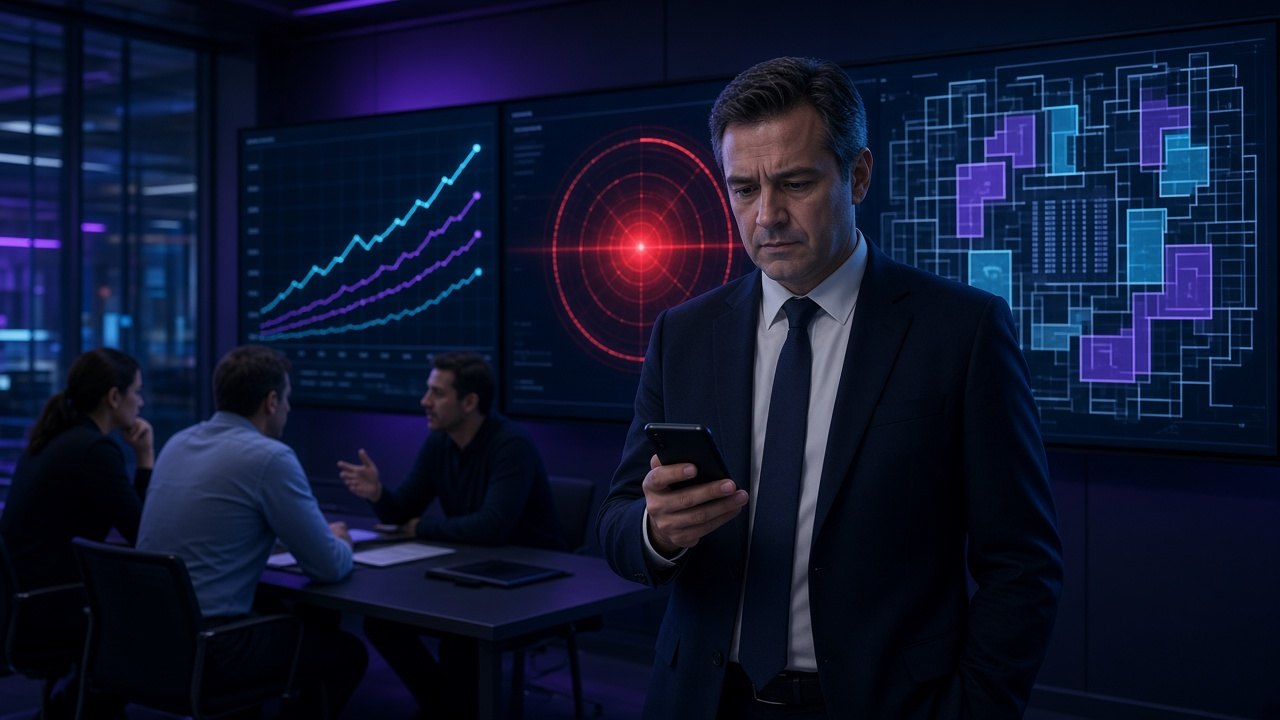
The morning of October 12, 2026, begins like any other—until 5:47 AM. The temperature monitors in a hypermarket’s cold storage units flicker red. Instead of -18°C, the sensors display +8°C. The store director, still in pajamas, receives a cryptic SMS: "Your automations are unresponsive. Pay 2 BTC within 6 hours or the doors stay open." Behind this message lies a brutal reality: 300 tons of perishable goods at risk, suppliers waiting in the parking lot, and 2,500 customers due to arrive in less than three hours.
The Crisis Team Before the Technical Team
In "The Attack", the player doesn’t step into the shoes of a SOC analyst but those of an operational leader. The first instinct? Do not touch the compromised systems. "A store director isn’t expected to reboot a PLC, but they must know who to call, in what order, and which risks to document for the executive committee," explains a PCL trainer. The simulation demands three immediate decisions:
- Isolate the OT network: Sever the link between cold storage systems and the management IT network—without triggering unnecessary alerts. A simple action, but one that requires pre-identified critical network valves (see the HVS framework).
- Activate the cold continuity plan: Switch to backup generators, even if it means reducing delivery windows. "The real trap? Assuming the generator will last 48 hours. In 80% of cases, it fails by H+12," notes a real-world incident integrated into the scenario.
- Prepare customer communication: Display a generic "Exceptional maintenance" message on checkout screens—without uttering the word "cyberattack." "A director who improvises an announcement in front of customer cameras loses 30% of their credibility," models the Predictive CyberScore (PCS).
The PCL Attestation: Validating Decision-Making Under Pressure
Unlike technical certifications, the attestation awarded after "The Attack" doesn’t measure knowledge—it evaluates decision-making reflexes. The player is scored on:
- Risk prioritization: Did they save frozen goods (high replacement cost) before fresh produce (lower margin)?
- Action traceability: Did they log every decision in a dedicated register, even under stress? "A director who forgets to note the time of the OT network shutdown gives insurers an open door," warns a PCL-affiliated legal expert.
- Executive alignment: Did they anticipate the C-suite’s questions about h-ROSI (hourly return on investment)? "A director who responds with ‘I’ve got this’ without data risks replacement within 24 hours," observes a CFO who played the scenario.
The scenario also introduces an ethical dilemma: at H+4, a supplier offers industrial coolers—for cash, off-contract. Accepting risks a tax audit; refusing risks €150,000 in spoiled goods. "The PCS models the impact of each choice on reputation and cash flow," details the facilitation guide.
Beyond the Scenario: Embedding Protocols in Reality
"The Attack" isn’t a serious game—it’s a crisis simulation grounded in real data. Cold storage temperatures, delivery timelines, and even customer reactions are based on past incidents (e.g., the 2026 attacks on Intermarché and U supermarkets or the 2023 breach at a U.S. slaughterhouse). "A director who plays the scenario once retains 30% of procedures. Those who replay it in ‘random challenge’ mode (e.g., generator failure + transporter strike) reach 85%," reveals an internal PCL study.
For deeper preparation, the Predictive CyberScore measures site resilience before an attack. "A PCS below 65/100 means the director has less than 2 hours to act before irreversible losses. Above 80, they gain 6 hours to negotiate with insurers," clarifies the framework.
The Core Lesson: Cyber Resilience is Decided Before the Attack
"The Attack" exposes an uncomfortable truth: in 90% of cases, the crisis is won or lost within the first 90 minutes. There’s no time to train teams or draft procedures. Only reflexes ingrained in daily routines save the day. "A director who has identified critical network valves, knows their OT contact’s number, and has simulated a power outage quarterly gains precious time," summarizes a former site manager turned PCL trainer.
The next time you walk into a supermarket, glance at the surveillance cameras near the cold storage units. Behind those electronic eyes is a director who, tomorrow, might have to choose between discarding €200,000 worth of salmon or risking food poisoning. Would you be ready to press the red button?